


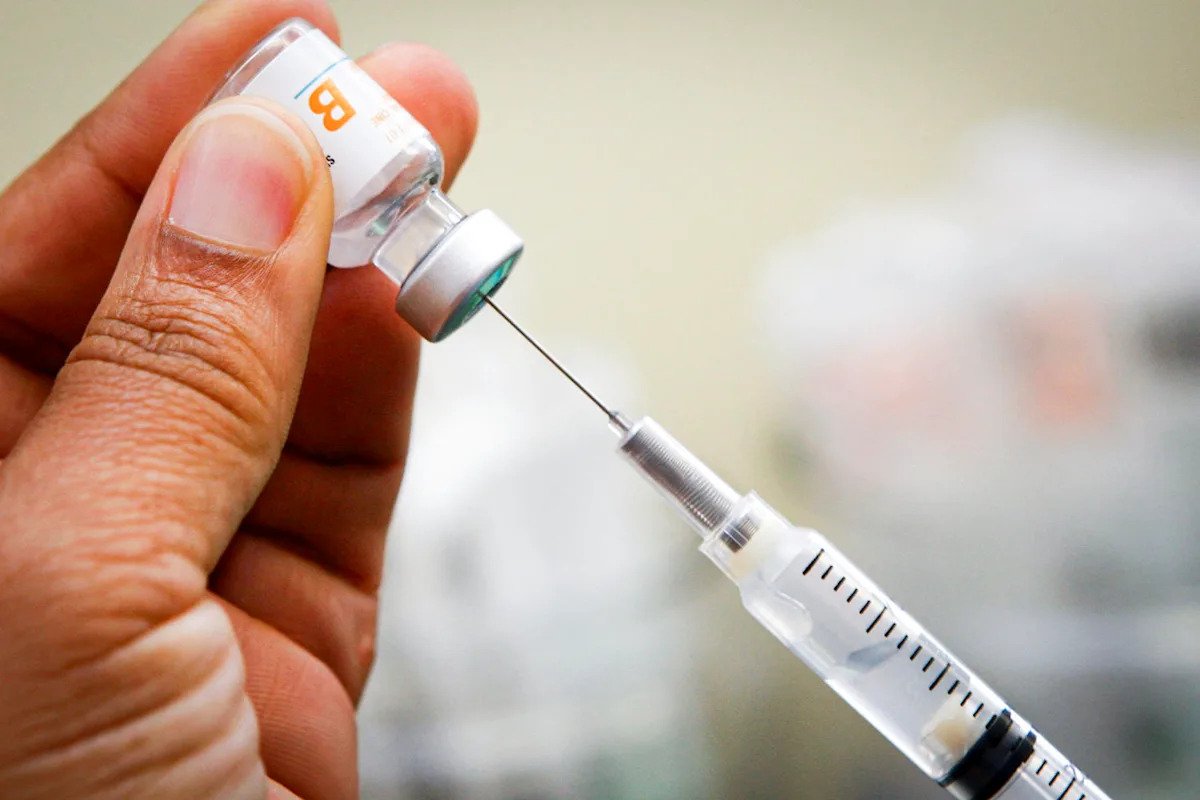
The Centers for Disease Control and Prevention is not expected to change recommendations for hepatitis B vaccines in newborns, after its panel of advisers tabled Friday a much-awaited vote on the issue.
The panel had been expected to recommend delaying the use of the vaccine in babies, currently administered shortly after birth, but some members expressed frustration over a lack of evidence about side effects and said more discussion was needed. One member also said the voting language wasn’t clear and could lead to confusing guidance.
The unorthodox decision follows a chaotic, unconventional voting process for the Advisory Committee on Immunization Practices (ACIP), whose 12 members were all appointed under Health Secretary Robert F. Kennedy Jr. in the last few months. Many have expressed skepticism about the safety and efficacy of vaccines.
The members were due to vote Friday on whether to delay the first dose of the hepatitis B vaccine until a child is at least 1 month old, provided the mother tests negative for the virus. Currently, the first dose is given within 24 hours of birth because hepatitis B — an incurable infection that can lead to liver disease, cancer and death — can be transmitted from mother to child during delivery.
The hepatitis B vaccine has become a target of Republican legislators, including Rand Paul of Kentucky, who question the medical necessity of protecting newborns if their mothers have tested negative for the virus.
ACIP member Dr. Robert Malone said Thursday that the committee took up the subject because “a significant population” in the U.S. has concerns about vaccine policy, including giving the hepatitis B vaccine at birth.
However, many public health experts questioned the need for a vote without new data to analyze.
Minutes before tabling the subject, the ACIP voted unanimously to recommend testing all pregnant women for hepatitis B. A spokesperson for the Department of Health and Human Services said the test is covered across insurance programs and the goal of the vote was to encourage providers and health systems to increase testing rates.
At the meeting on Thursday, CDC staffers summarized the results of 17 studies, which found that the hepatitis B vaccine is overwhelmingly safe and has helped to virtually eliminate hepatitis B infections among newborns. The agency also noted that many pregnant women aren’t screened for hepatitis B in the U.S., making it hard to rely on testing to decide which children to vaccinate. According to the CDC, 12-16% of pregnant women in the U.S. are never tested for hepatitis B during pregnancy — and even if they are, some cases can be missed.
Several ACIP members pushed back on what they said were omissions in the CDC’s presentations, pointing to individual studies and anecdotes that they said raised questions about neuro-developmental side effects.
Two committee members, Malone and Vicky Pebsworth — both of whom have a history of sharing misinformation about vaccines — said the CDC presentations omitted a 2012 report from the Institute of Medicine. The report said it couldn’t determine whether hepatitis B vaccines were associated with brain inflammation because no studies had properly looked at that research question.
“The absence of data that statistically proves lack of safety does not mean that the product is safe,” Malone said on Friday morning.
Pebsworth also raised concerns about CDC data showing irritability or fussiness in some infants who received the hepatitis B vaccine.
“These are not trivial reactions,” Pebsworth said.
However, such symptoms are hard to attribute to vaccines because infants can be irritable or fussy regardless of vaccination.
Dr. Cody Meissner, a pediatrician and the only current ACIP member who has previously served on the committee, pushed back on Pebsworth’s concern, noting that irritability or restlessness “are certainly not objective parameters that should be used to assess safety.”
He added that no vaccine is 100% safe or effective, but that the committee was meant to decide whether protection from vaccines outweighs any possible risks.
“When you apply that to a newborn hepatitis B vaccine, I don’t think there’s any question whatsoever that the benefit far outweighs any adverse side effect,” he said.
Cases of acute hepatitis B infections among children plummeted after the CDC began recommending a universal dose at birth in 1991.
It’s unclear whether ACIP will revisit the subject in the future. If they do, liaisons from the National Foundation for Infectious Diseases, the American College of Physicians and the Society for Adolescent Health and Medicine called on the committee to return to a framework for vaccine recommendations that has long guided the advisory panel’s decisions. The framework considers a vaccine’s risk and benefits, whether a recommendation is feasible and how it would impact health equity.
Dr. Amy Middleman, a liaison for the Society for Adolescent Health and Medicine, said it’s easy to be distracted by conflicting studies.
“I would urge the committee to use the methodical, scientific method to weigh the risks and benefits appropriately,” she said.
This article was originally published on NBCNews.com
