


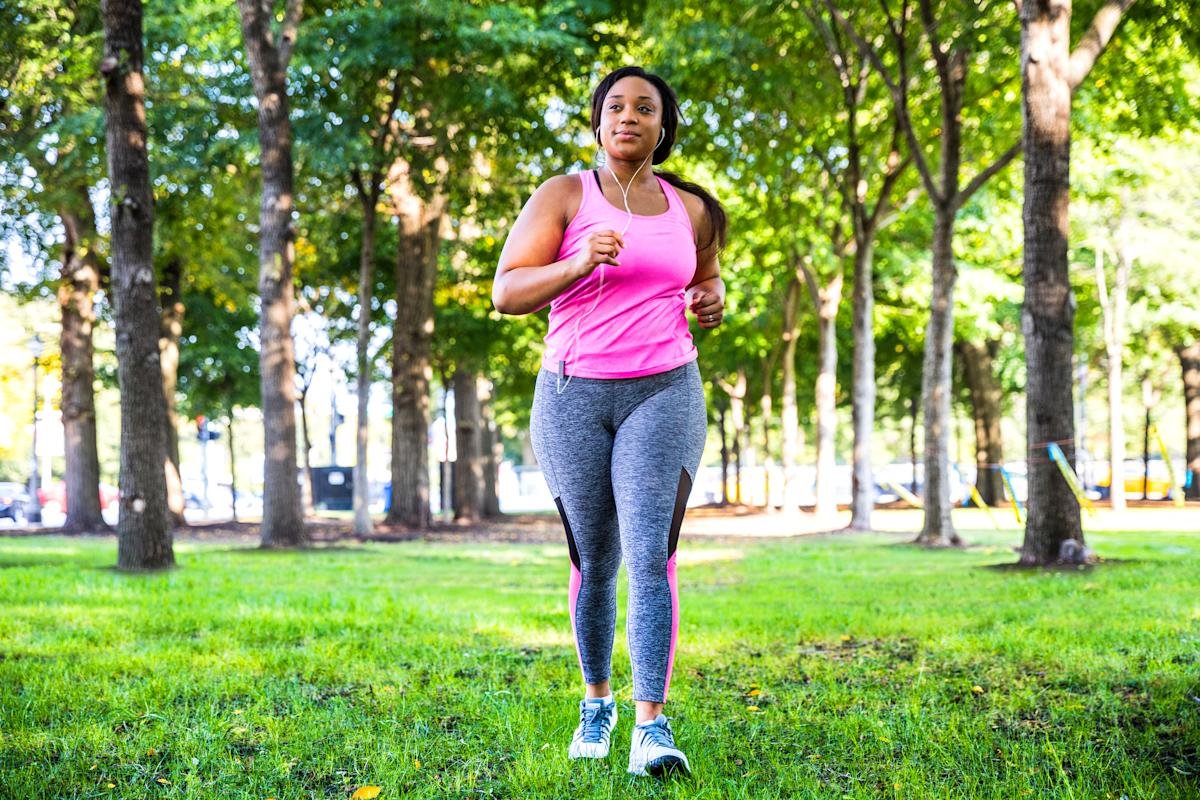
Few forms of exercise have exploded in popularity over the past few years like walking workouts. Not only is walking accessible to most, but a growing body of research has found regular walks can support your health and healthy aging.
While science suggests that any walks are beneficial, you can get more out of your walking workouts by challenging yourself. “If you can push yourself and get your heart rate up, it’s really helpful,” Albert Matheny, personal trainer and co-founder of SoHo Strength Lab, tells Yahoo Life.
Pushing yourself during walking workouts helps with things like burning more calories and building muscle, and it can also boost your heart health, fitness coach Tyneka Pack, founder and chief executive officer of ImPackt Fitness in Owings Mills, Md., tells Yahoo Life.
“When you challenge yourself, your heart works hard and builds stamina,” she says. But Almoni Ellis, a personal trainer in Chesapeake, Va., tells Yahoo Life that your body adapts to become more efficient the more you walk. So it helps to keep stepping up your workouts to get the best results. “With all exercise, as your body adapts to the movement, it requires an increase in intensity and effort to continually progress,” Ellis says.
Looking to take your walking workouts to the next level? Here’s what trainers recommend, plus why walking is so good for you in the first place.
Why is walking so good for you?
A flood of recent research has linked regular walks to impressive health benefits. A British Journal of Sports Medicine analysis of data from more than 30 million people found that those who did 75 minutes of moderate-intensity exercise (like brisk walking) per week had a 23% lower risk of dying early.
Another study, this one published in the Lancet, tracked 700 adults with lower back pain for three years. The researchers found that those who were asked to follow a walking program for six months had fewer issues with back pain returning and more time between back pain flares than those who didn’t follow a walking routine.
Walking can even support your mood. A JAMA Psychiatry study found that walking for an hour a day can reduce the risk of depression by 26%. “It also strengthens your muscles and bones and decreases the risks of chronic diseases too,” Pack says.
How to make your walks more challenging
Matheny stresses that any walks is better than none, especially if your activity level is currently lower than you’d prefer. But if you’re ready to kick the intensity up a notch, experts recommend doing these modifications to make your walking workouts more challenging:
Push the pace
It’s easy to get content with moving at whatever speed feels good to you. But if you feel comfortable at your current pace, it’s time to take things to the next level. “Increasing your pace will make it more challenging,” Pack says.
Matheny suggests moving at a speed where you start to breathe more heavily and trying to maintain that. Taking shorter steps rather than longer strides, as well as bending your elbows to about 90 degrees and pumping your arms for momentum, can help you maintain a faster clip. Once you feel good at faster speeds, he suggests that you push the pace to the point where you could almost break into a jog, while still sticking with a low-impact workout.
You can also track your speed with a fitness app to keep tabs on your progress.
Do interval workouts
Interval training simply means alternating between low-intensity and high-intensity activity in a workout. “Interval training gives your body an opportunity to push itself while allowing for proper recovery in between intervals,” Ellis says. By keeping your body “guessing,” it can help to improve your fitness and calorie burn, Matheny says. “This is a great way to incorporate a low-impact ‘high-intensity interval training,’” Pack says.
There are a few ways to approach this. One is that you can simply move faster during your walks for a certain period of time, like a minute or two, before slowing down to recover and then speeding up again. But Matheny says you can also incorporate things like step-ups on a park bench during your walks to help quickly increase your heart rate, before continuing with your walk.
Add more distance — but not too much at once
Just like any form of exercise, ramping up the intensity or distance too fast raises the risk of injury. “Ten thousand steps a day is the sweet spot,” Pack says. “But for someone who may only be at 3,000 steps a day, they can gradually add more distance over time.”
She suggests adding an additional 1,000 steps a week until you hit your target step count. “Maybe the first goal is to hit 4,000 a day for a week; then 5,000 the next week,” she says.
Use weights — but not hand weights
Matheny recommends adding weights to your walks to push yourself “after you feel like you can’t walk any faster.” But experts agree that a weighted vest is a better option than using hand weights. “Hand weights can throw off your normal walking gait,” raising the risk of injury, Matheny explains. “It doesn’t give you a good arm workout either,” he adds. Pack agrees. “A vest gives equal weight distribution; hand weights may not and could be harder on joints,” she says.
Many weighted vests allow you to add more weights over time to increase the intensity, giving you plenty of mileage out of this investment. “Wearing a weighted vest and adding resistance is a great option to challenge your body during walks,” Ellis says. “That improves bone density and strengthens your core musculature.”
Crank up the incline
This is easier if you’re on a treadmill, but you can also walk up hills outside. Walking on an incline “will increase your heart rate and can incorporate more glutes and hamstring involvement,” Pack says.
If you’re on a treadmill, she recommends walking at different inclines to switch up the challenge. So that could mean walking at an incline of five, before switching to eight and then back to five, all in the same workout. For outdoor walks, that may simply mean finding a hilly route near you, Matheny says.
Overall, trainers stress the importance of keeping things fresh to get the most out of your walking workouts. “Challenge yourself,” Matheny says.
